We showed a mushroom robot and Sankome at Hakubutsu Festa
- Published on
On July 20, 2026, we showed a mushroom robot and Sankome at Hakubutsu Festa! 12.
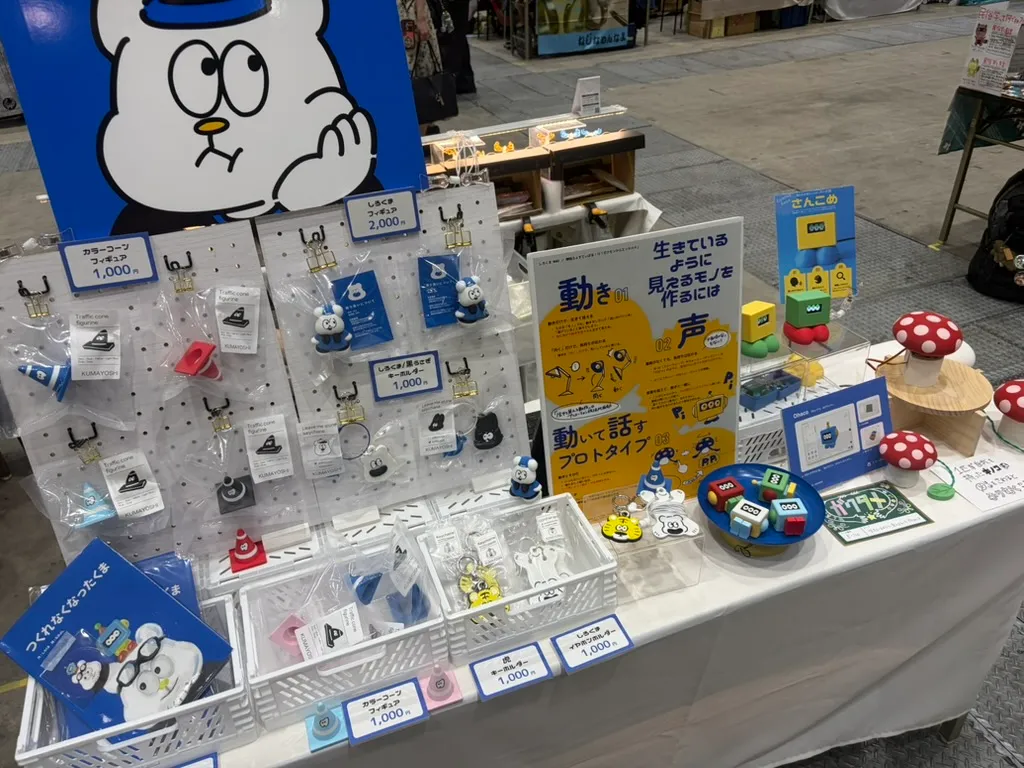
The theme of our exhibit was: “How can we make an object look alive?”
Sankome is a “mysterious creature.” It moves its eyes, reacts when shaken, and falls asleep when left alone. These small behaviors help it feel alive.
I had been wondering where this sense of life and energy comes from. Hakubutsu Festa felt like a good chance to look into it properly.
The mushroom robot
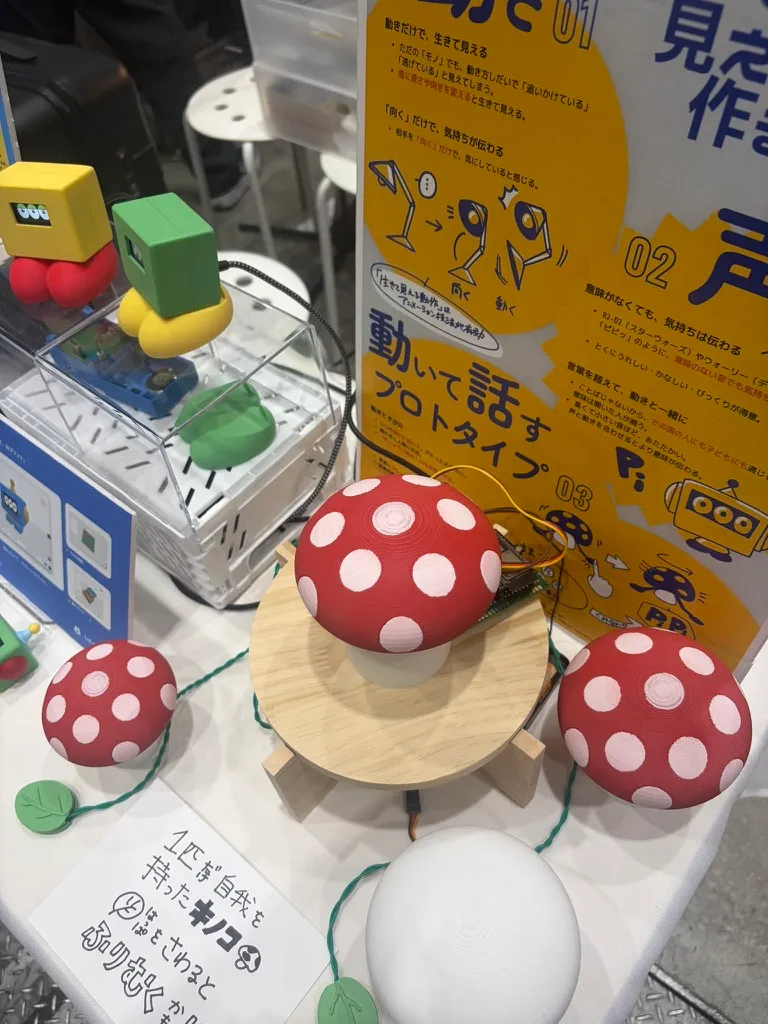
For this event, I made this new mushroom robot.
Sankome has three eyes, so its expressions and animations can make it look quite alive. The mushroom has no eyes or mouth. I wanted to see if something without a face could still show feelings through movement alone.
Inside are an ESP32-S3 and two servo motors. One servo turns the head from side to side, and the other tilts it up and down. Most of the time, the mushroom slowly sways as if it is breathing. Sometimes it looks around as if it has noticed something.
The leaf-like part on its side works as a feeler. When someone touches it, a tilt sensor reacts, and the mushroom turns toward the touch.
I also planned to give the mushroom a voice. Like Sankome, it had a system for speaking a made-up robot language.
But when I tried it, a mushroom suddenly talking felt strange. So I removed the voice. Instead, it shows feelings by nodding, looking surprised, and looking around.
The robot-language system was always meant to be shared with Sankome, so Sankome still uses it.
Making a pan-and-tilt mechanism in Ohaco
I designed the mushroom shell and its pan-and-tilt mechanism in Ohaco, the 3D builder I am developing.
This is what Ohaco looked like at the time.
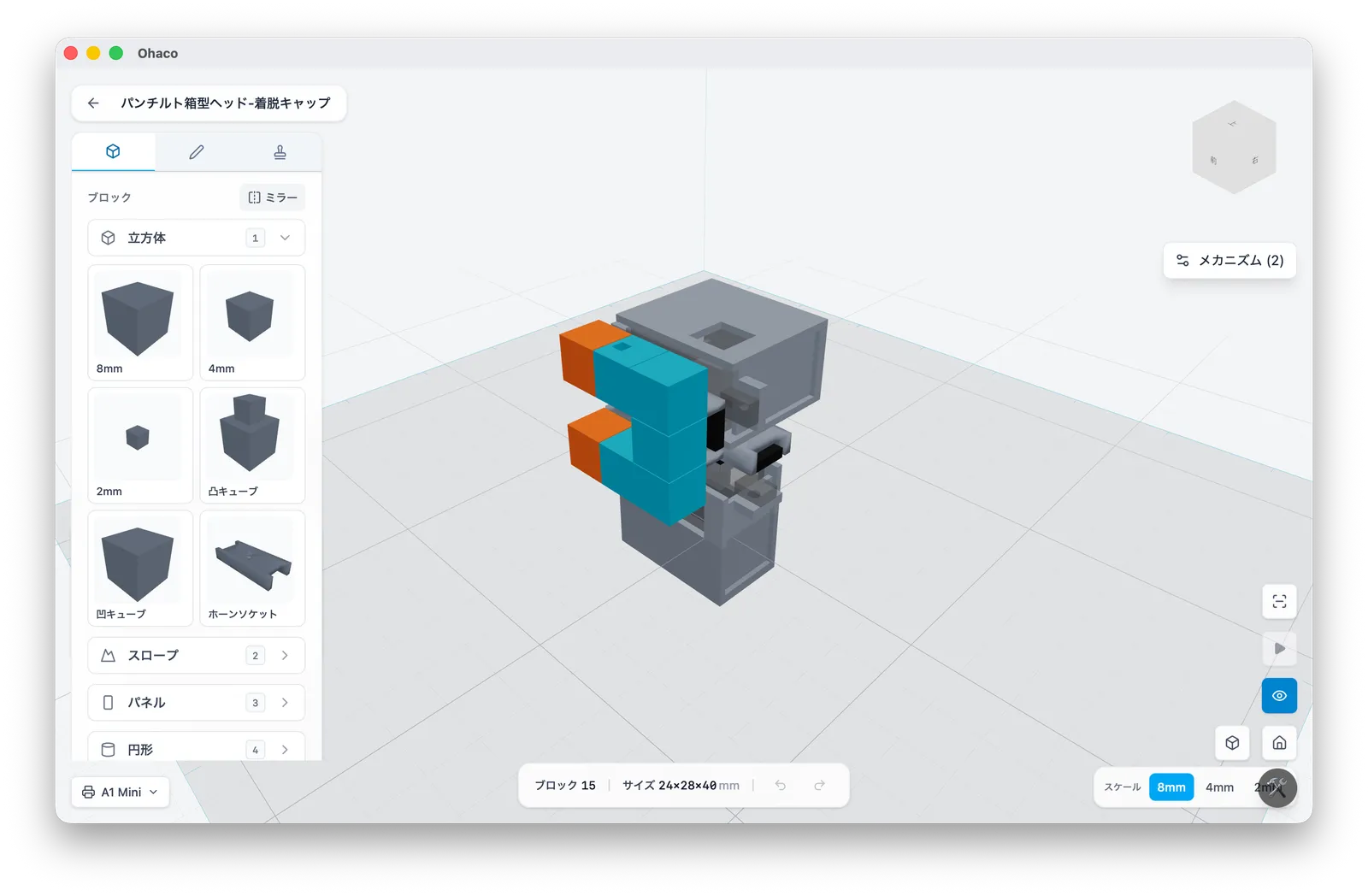
If I only wanted to make this mechanism, I could have designed it in a normal CAD tool. But since I was already building Ohaco, I decided to use it.
Ohaco was still in development, and it could not yet make a two-axis servo mechanism like this. So before making the mushroom, I first had to add that feature to Ohaco.
Building the holder for the two servos was much harder than I expected. I tried many different designs. In the end, developing this part of the software took more time than making the mushroom itself.
Building the circuit
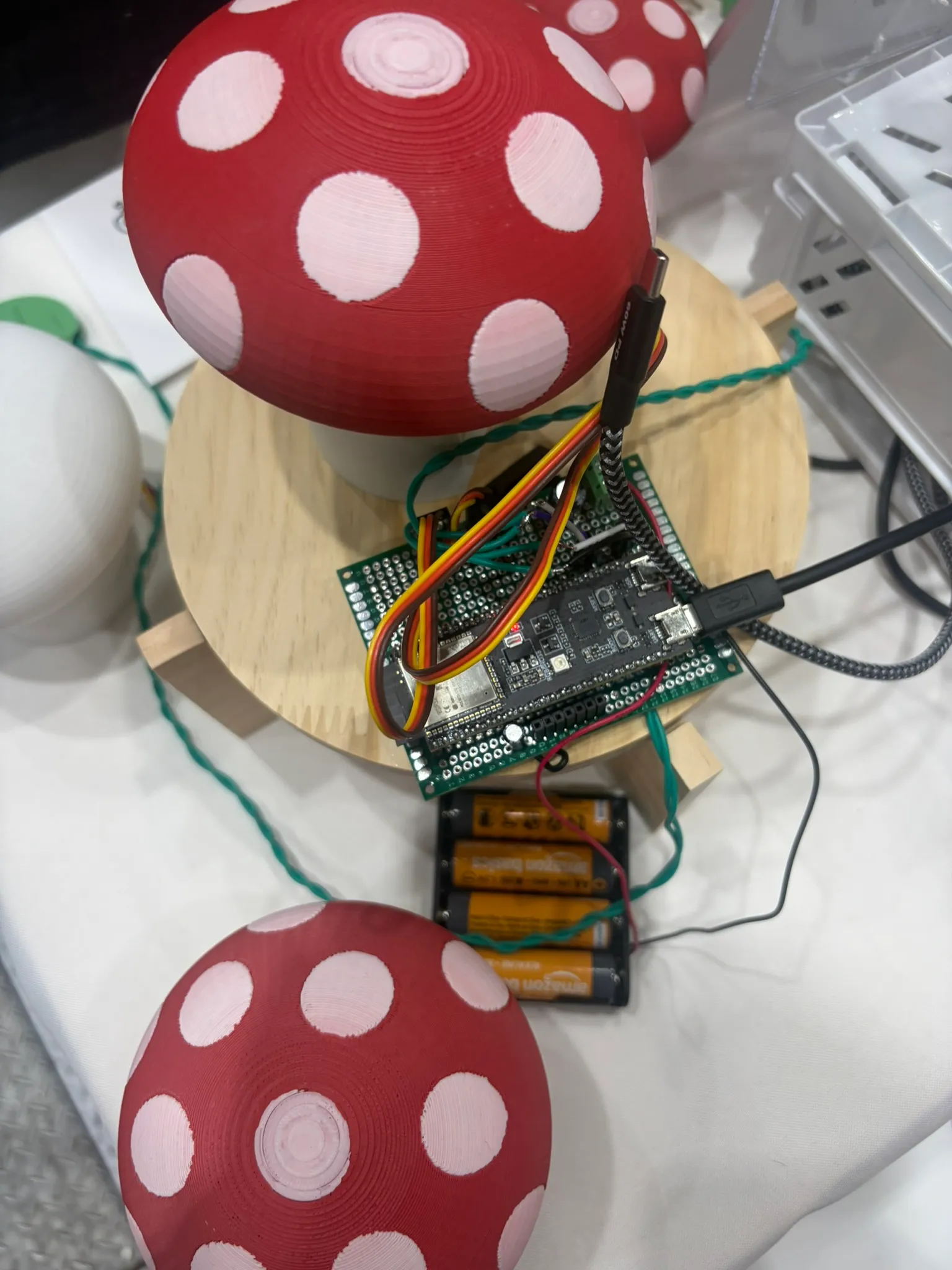
When I first made Sankome, I went straight to a custom PCB. This time, I thought it might be more fun if the circuit stayed visible. It would look more like a small electronics project. So I built the circuit by soldering everything onto perfboard.
This was my first time using perfboard. To be honest, I made many mistakes. While building it, I kept thinking that soldering might not be for me.
It took much longer than I expected, but I managed to put the ESP32-S3, two servos, and the touch sensor on one board. I was worried that it might suddenly stop working on the day of the event. Luckily, it stayed stable until the end.
Sankome was there too
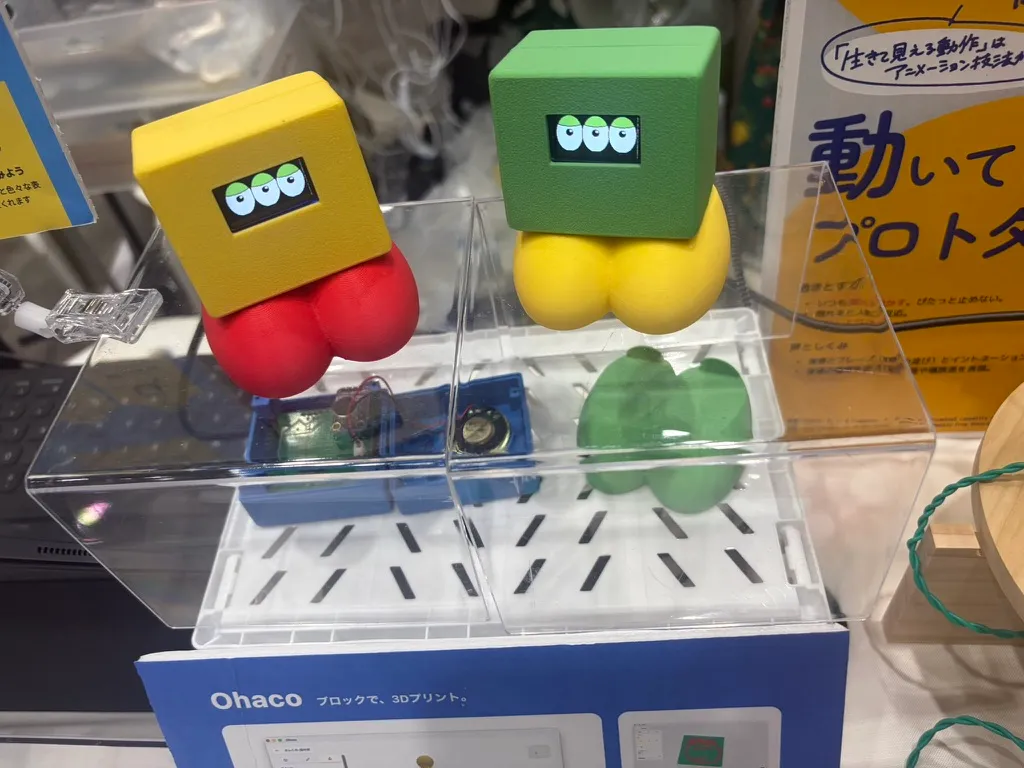
I also placed Sankome next to the mushrooms. Sankome is a mysterious robot creature with three eyes.
Its screen eyes make different expressions, and it reacts to sound and movement. It becomes happy or cries when someone talks to it. When shaken, it gets heart-shaped eyes or becomes dizzy. If left alone, it slowly gets sleepy and finally falls asleep.
For this event, I rebuilt much of its voice system.
Before, Sankome played MP3 files that I had prepared for each expression. This time, I defined short sounds like “pi,” “kyu,” and “puyu” as phonemes. Sankome combines them into phrases and adds intonation to create its own language.
When it is happy, the voice is high and fast. When it is sleepy, the voice is low and slow. Even with the same sounds, the pitch and pauses change with its expression. Each Sankome at the exhibit also had a slightly different voice, though the difference was small enough that most people probably did not notice it.
I also made a system that lets nearby Sankome robots affect each other. When one speaks or reacts to something, the others slowly begin to react in sync. The idea is similar to fireflies flashing together. In the end, I only placed two Sankome robots at the event, so the effect was quite hard to notice. But they were still syncing with each other.
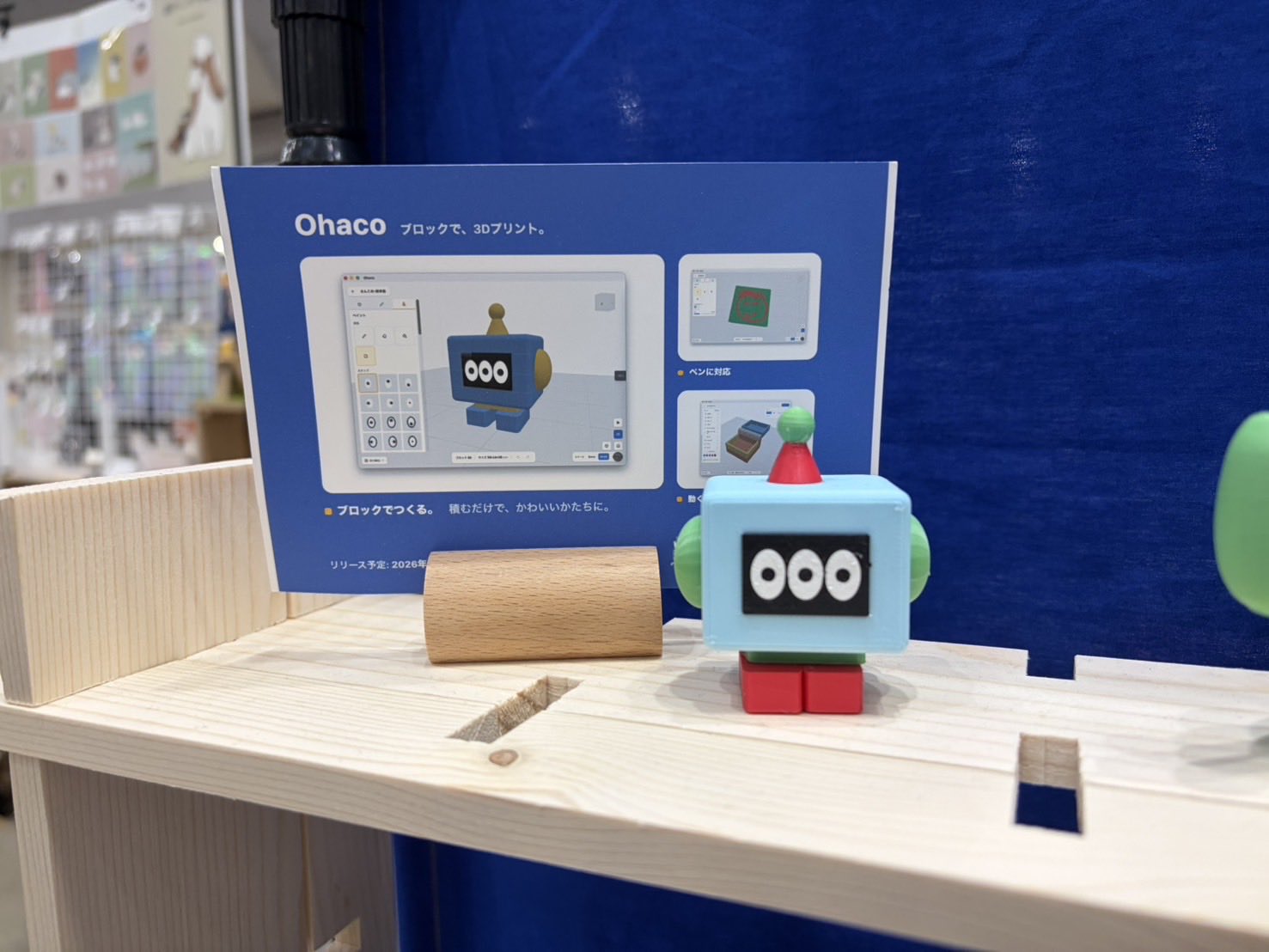
We also showed a Sankome made in Ohaco, the picture book The Bear Who Couldn't Make, figures, keychains, and other items.
I prepared a little too seriously
This was my first time at Hakubutsu Festa.
We were also joining a special program called “Gakumon kara Entertainment,” which roughly means “From Learning to Entertainment.” I assumed that I needed to prepare something academically solid.
I looked into research on topics such as seeing life in moving shapes, using animation principles in robots, and expressing feelings with meaningless sounds. I used what I learned to build the exhibit and create the poster.
I knew that many visitors would not be researchers, so I wanted to make the poster easy to understand. I simplified the ideas, and my wife drew the illustrations for it.
The poster did not look like a conference poster. Still, the way I prepared for it felt exactly like the academic conferences I attended as a student.
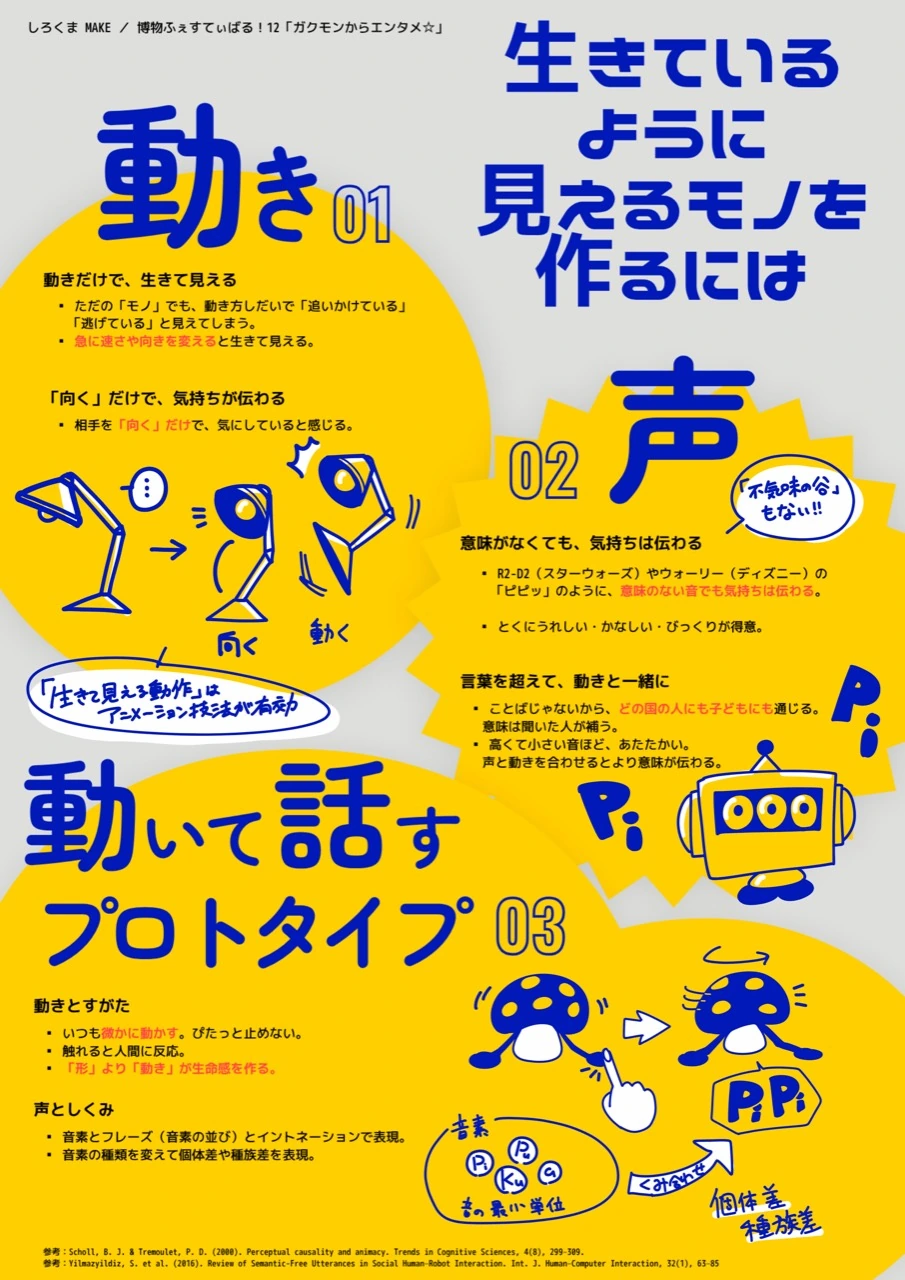
But once I got there, I had almost no chance to explain the poster, the related research, and the small details of the implementation step by step. It was not like a poster session at all. Most people first wanted to touch the moving mushrooms and Sankome robots.
I realized that the event felt quite different from what I had expected.
I had never visited Hakubutsu Festa before. I prepared based only on the word “learning,” so I may have gone a little too far.
Still, one elementary-school-aged visitor knew an unusual amount about the ESP32. A few other visitors also asked very sharp questions.
The research was not something I could explain to everyone. But when someone wanted to know more, I had plenty to talk about. In the end, I was glad that I had prepared all of it.
Starting from research made this project quite different from my usual work. I first read the papers, then built something based on them and tried it in the real world. That was an interesting way to work.
Thank you to everyone who stopped by and tried the robots.
I also made the mistake of announcing the wrong exhibition date. I am sorry to anyone who changed their plans based on that information. And thank you very much to the event staff for handling the last-minute change.
Related posts
Showed a mini Sankome at Design Festa 63
Naoyoshi had a booth at Design Festa 63, a big Tokyo indie art and craft fair. I sent along a mini Sankome printed with Ohaco, the 3D builder I'm working on. It got a better response than I'd expected.
What I wanted was the process, not the product
I've said a few times that I was going to build a small robot called Sankome. Recently, though, I noticed something a little troubling. Maybe what I really wanted, more than the robot itself, was the time I spent making it. This is a bit of a problem. Whether the person who keeps saying "I'm going to build it" actually wants the finished robot, it turns ou
I built a forum for Kosshi
I built a forum for Kosshi and started running it in July. It's a place where posts and replies stay together by topic, rather like a message board. I've been so absorbed in developing Kosshi these past few months that I haven't had much time to write here. In the meantime, the conversations on the forum have become more active, and I've started to feel tha
Mostly a weekly summary of new posts, sent about once a week.
You can unsubscribe anytime from the link in any email.